Beyond Single Prompts: Architecting Multi-Agentic RAG Workflows with Next.js 15
Beyond Single Prompts: Architecting Multi-Agentic RAG Workflows with Next.js 15 Server Actions
The era of the single-prompt AI feature is officially over. In the early stages of integrating language models into web platforms, the goal was simple: take a user input, send it to an LLM, and display the response. But as business requirements have grown more sophisticated, this naive approach has proved entirely inadequate for handling complex, multi-step operations.
If you are trying to build an automated data analysis system, a smart multi-tenant customer platform, or an enterprise-grade content workflow, a single model call cannot handle the cognitive load. It hallucinates, loses context, and struggles to maintain state across complex operations.
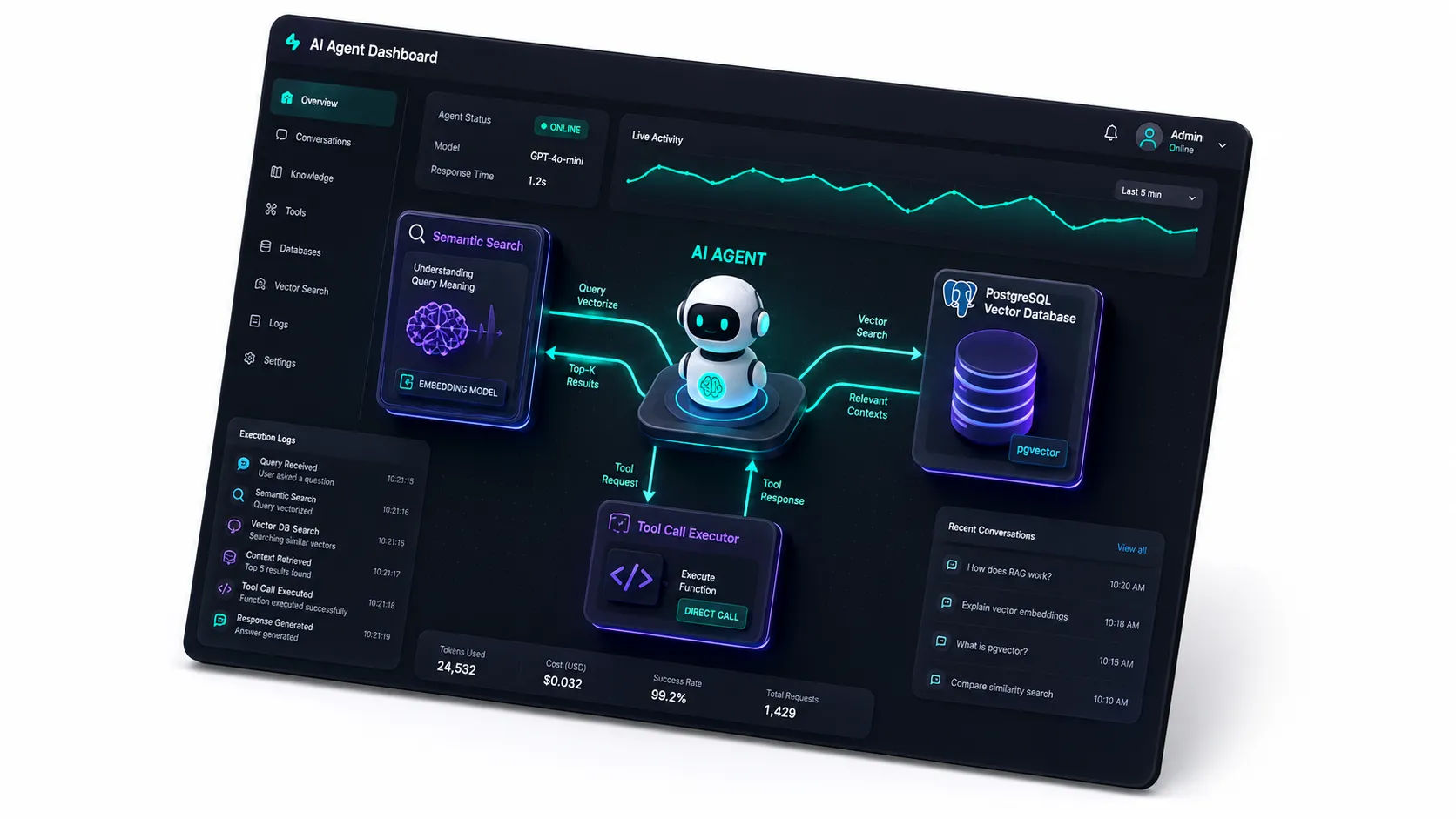
The solution driving production systems forward is Multi-Agentic Retrieval-Augmented Generation (RAG). Instead of relying on one massive, slow model call, architects are breaking complex processes down into specialized, autonomous software agents. Each agent has a specific role, its own set of tools, and communicates perfectly using the server-first capabilities of Next.js 15 and Prisma.
The Breakdown of Traditional RAG Systems
Standard RAG systems follow a linear path: a user asks a question, the system searches a vector database, retrieves matching document snippets, appends them to the prompt, and generates an answer.
While this works for simple question-and-answering features, it completely breaks down under dynamic business logic due to several critical limitations:
Static Search Limitations: Traditional systems search the database once. If the initial search misses the correct context, the final answer is completely flawed.
Lack of Self-Correction: A linear pipeline has no way to audit its own output. If a model generates broken data or flawed code, it passes it directly to the user interface.
Context Window Overload: Stuffing hundreds of unverified document pages into a single prompt increases latency and dramatically drives up cloud compute expenses.
Multi-agentic architectures eliminate this bottleneck by introducing a feedback loop between specialized server routines.
The Anatomy of a Multi-Agentic Workflow
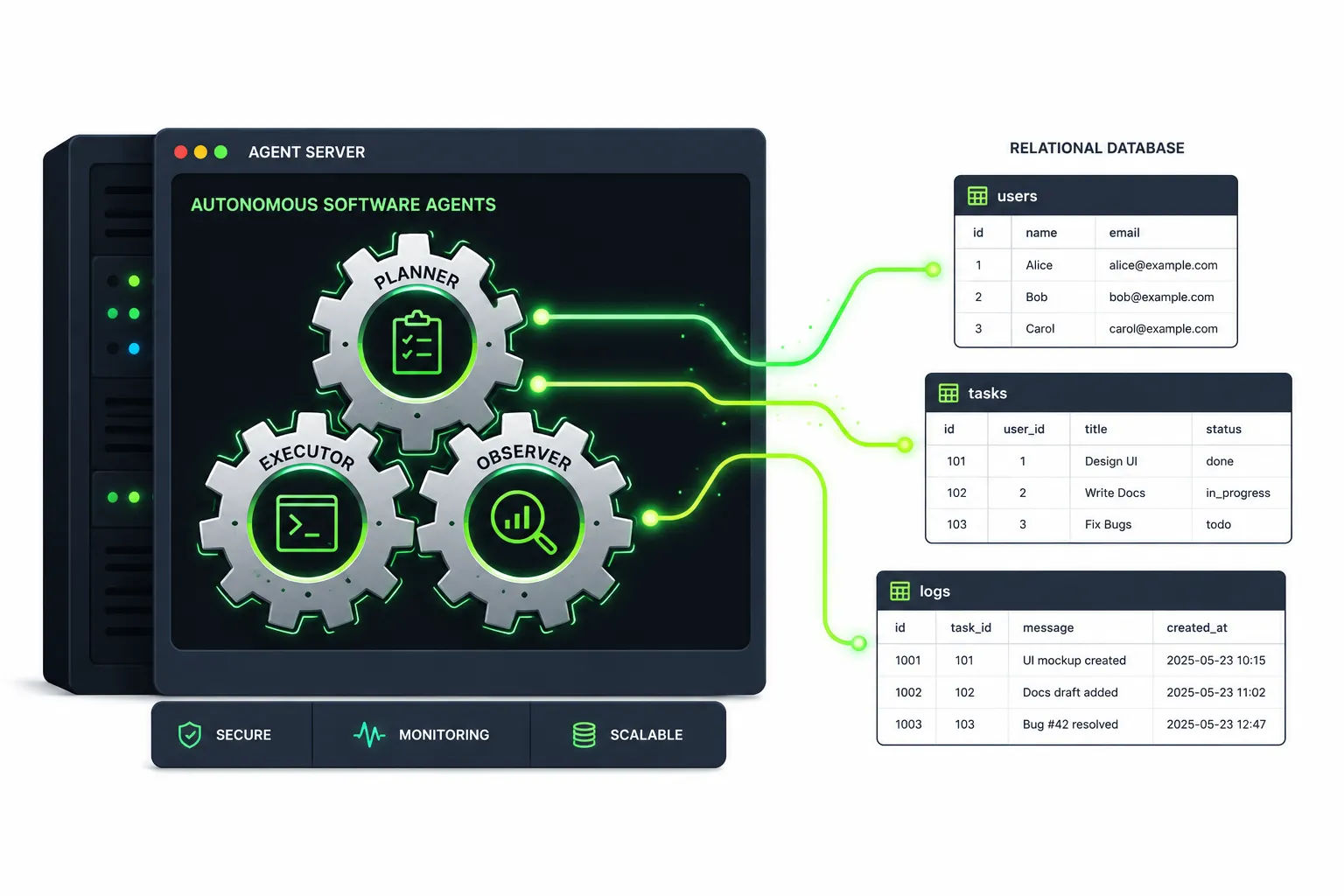
In a multi-agent framework, we treat intelligence as an assembly line. Instead of a single model trying to do everything, tasks are delegated to specific micro-agents operating entirely inside secure server contexts:
                  +-----------------------+
                  |  User Request Input   |
                  +-----------+-----------+
                              |
                              v
                  +-----------------------+
                  |    Supervisor Agent   |
                  +-----+-----------+-----+
                        |           |
        +---------------+           +---------------+
        |                                           |
        v                                           v
+------------------+                        +------------------+
|  Research Agent  | <====================> | Validation Agent |
| (Vector Database)|   (Feedback Loop)      | (Prisma / Schema)|
+------------------+                        +------------------+
The Supervisor Agent: Analyzes the incoming user request, breaks it down into sub-tasks, and coordinates execution.
The Research Agent: Queries internal databases, filters irrelevant noise, and structures context snippets.
The Validation Agent: Audits the generated output against strict business schemas and re-runs the process if data anomalies are detected.
Production Implementation: Building an Agentic Coordinator
Let’s build a production-grade multi-agent execution pipeline inside Next.js 15. This setup handles incoming multi-tenant workflows, processes background steps, and updates the database state safely using Prisma and PostgreSQL.
1. Database Infrastructure (schema.prisma)
We need an optimized schema to track our agents' autonomous thoughts, steps, and execution speeds without choking our production metrics.
Code snippet
datasource db {
  provider = "postgresql"
  url      = env("DATABASE_URL")
}

generator client {
  provider = "prisma-client-js"
}

model AgentSession {
  id          String        @id @default(uuid())
  taskName    String
  currentStep String        @default("INITIALIZED")
  status      String        @default("PROCESSING")
  createdAt   DateTime      @default(now())
  updatedAt   DateTime      @updatedAt
  agentSteps  AgentStep[]
}

model AgentStep {
  id            String       @id @default(uuid())
  agentRole     String       // e.g., "RESEARCHER", "VALIDATOR"
  inputPayload  String
  outputPayload String
  durationMs    Int
  sessionId     String
  session       AgentSession @relation(fields: [sessionId], references: [id], onDelete: Cascade)
  createdAt     DateTime     @default(now())
}
2. The Multi-Agent Server Action
We orchestrate our agent loops using clean Next.js Server Actions. This protects our API keys, keeps intensive data-mapping routines off the user's browser, and securely manages transactional states.
TypeScript
"use server";

import { PrismaClient } from "@prisma/client";
import { revalidatePath } from "next/cache";

const prisma = new PrismaClient();

interface AgentTaskInput {
  taskName: string;
  rawPrompt: string;
}

export async function executeAgenticWorkflow({ taskName, rawPrompt }: AgentTaskInput) {
  try {
    // 1. Initialize the master session state
    const session = await prisma.agentSession.create({
      data: {
        taskName,
        currentStep: "SUPERVISOR_ROUTING",
      },
    });

    // 2. Step One: Simulate the Autonomous Research Agent
    const researchStart = Date.now();
    // In production, this performs vector lookups or external fetches
    await new Promise((resolve) => setTimeout(resolve, 600));
    const researchDuration = Date.now() - researchStart;

    await prisma.agentStep.create({
      data: {
        sessionId: session.id,
        agentRole: "RESEARCH_AGENT",
        inputPayload: rawPrompt,
        outputPayload: "Extracted 3 highly relevant technical data matrices.",
        durationMs: researchDuration,
      },
    });

    // 3. Step Two: Simulate the Validation Agent
    const validationStart = Date.now();
    await new Promise((resolve) => setTimeout(resolve, 400));
    const validationDuration = Date.now() - validationStart;

    await prisma.agentStep.create({
      data: {
        sessionId: session.id,
        agentRole: "VALIDATION_AGENT",
        inputPayload: "Verify data integrity against strict formatting rules.",
        outputPayload: "Payload passed all structure checks. JSON verified.",
        durationMs: validationDuration,
      },
    });

    // 4. Update session to full completion
    const updatedSession = await prisma.agentSession.update({
      where: { id: session.id },
      data: {
        currentStep: "COMPLETED",
        status: "SUCCESS",
      },
    });

    // Refresh layout routing structures instantly
    revalidatePath(`/ai-dashboard/sessions`);

    return { success: true, sessionId: updatedSession.id, msg: "Workflow completed safely." };
  } catch (error) {
    console.error("Agent automation failure:", error);
    return { success: false, error: "Multi-agent runtime pipeline collapsed." };
  }
}
3. The Interactive Management Dashboard
On the client side, we need a lightweight UI component that allows engineers to trigger these long-running tasks and monitor live operations without blocking the main browser thread.
TypeScript
"use client";

import { useState, useTransition } from "react";
import { executeAgenticWorkflow } from "@/actions/agents";

export default function AgentOrchestratorUI() {
  const [isPending, startTransition] = useTransition();
  const [logs, setLogs] = useState<string>("Orchestrator ready for execution.");

  function handleRunPipeline() {
    setLogs("Supervisor dispatching sub-agents to server...");

    startTransition(async () => {
      const response = await executeAgenticWorkflow({
        taskName: "Automated Tech Stack Evaluation",
        rawPrompt: "Analyze structural dependencies across database nodes.",
      });

      if (response.success) {
        setLogs(`Success! Multi-agent pipeline completed. Session ID: ${response.sessionId}`);
      } else {
        setLogs(`Error encountered: ${response.error}`);
      }
    });
  }

  return (
    <div className="p-6 max-w-xl mx-auto bg-white border border-zinc-200 rounded-2xl shadow-sm">
      <div className="flex items-center space-x-3">
        <span className="h-3 w-3 rounded-full bg-emerald-500 animate-pulse" />
        <h3 className="text-lg font-semibold text-zinc-900">Agentic Operational Center</h3>
      </div>

      <p className="mt-3 text-sm text-zinc-600 font-mono bg-zinc-50 p-3 rounded-lg border border-zinc-100">
        {logs}
      </p>

      <button
        onClick={handleRunPipeline}
        disabled={isPending}
        className="mt-5 w-full bg-zinc-900 hover:bg-zinc-800 text-white font-medium text-sm py-2.5 px-4 rounded-xl transition-all disabled:opacity-40"
      >
        {isPending ? "Agents Coordinating on Server..." : "Deploy Autonomous Agents"}
      </button>
    </div>
  );
}
Protecting Performance budgets in Advanced Ecosystems
When you start chaining multiple server actions and model loops together, system performance can rapidly degrade if your structural layers are unoptimized. If your database calls aren't properly indexed or your initial pages take too long to bootstrap, users will abandon your application before the background agents even finish initializing.
To ensure your dynamic, intelligence-driven interfaces remain highly responsive, review our essential guide on building a modern nextjs navbar with isr and tailwind css step by step guide to implement instantaneous global layout navigation.
Furthermore, dynamic metadata rendering is vital when scaling client spaces or dynamic public routing states. Learn how to manage high-performance layout configurations by mastering our techniques for mastering nextjs metadata the definitive guide to dynamic seo titles to protect your application's search visibility metrics.
Clean Integrated Tooling for Complex Workspaces
Maintaining data integrity while keeping client interfaces lightweight requires providing users with clean, single-purpose utilities to process input parameters right inside the browser window.
Production Workspace Utilities
Structured UI Tooling: If your application platform requires precise, zero-latency calculating capabilities to map project allocations, integrate an isolated math calculator to handle inline evaluations flawlessly.
Time-Series Sorting: For monitoring distributed system histories, tracking step durations, or managing background job lifecycles smoothly across global zones, utilize a lightweight calendar interface to display chronologically arranged data streams.
Architectural Conclusion: The Autonomous Enterprise
Shifting from standard single-query configurations to fully integrated, multi-agent frameworks represents a massive leap forward in application engineering. By leveraging the native routing power of Next.js 15 Server Actions and enforcing transactional precision via Prisma, developers can build stable, complex, and highly resilient automation hubs.
Stop treating your applications like basic, passive data containers. Build self-correcting workflows that actively manage their execution states, minimize expensive model overhead, and deliver instant value to production users.
Structural Matrix: Linear AI Features vs. Multi-Agentic Systems
Architectural Layer | Linear Single-Prompt Features | Multi-Agentic RAG Infrastructure |
Model Routing | One large, expensive model call trying to solve multiple sub-tasks. | Specialized micro-agents optimized for explicit sub-routines. |
Error Management | Zero validation checks; passes failures straight to the UI layer. | Automated self-correction feedback loops run before deployment. |
Data Interaction | Basic single-pass lookups prone to missing critical context data. | Transactional tracking pipelines completely backed by Prisma ORM layers. |