Beyond Static: Next.js Server Components & AI for Dynamic Experiences
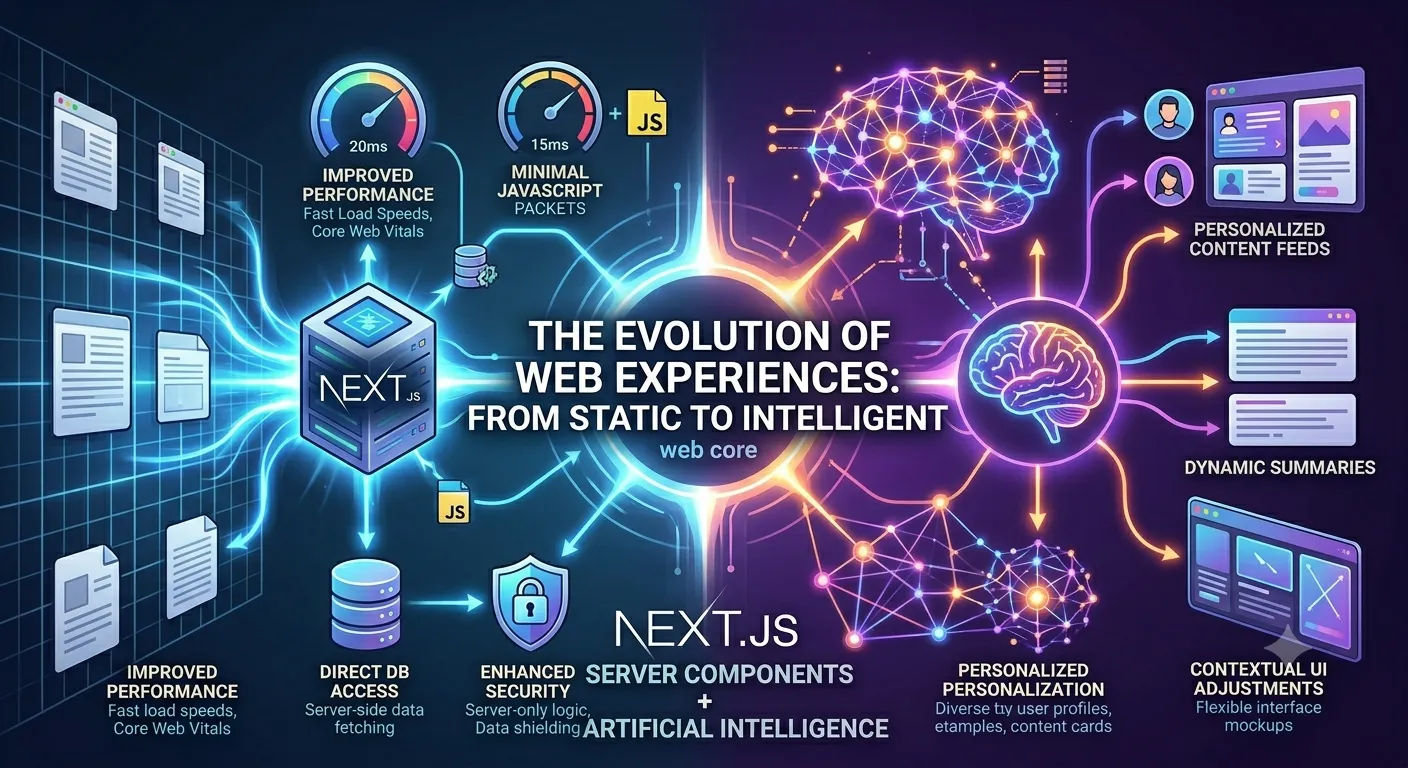
The Evolution of Web Experiences: From Static to Intelligent
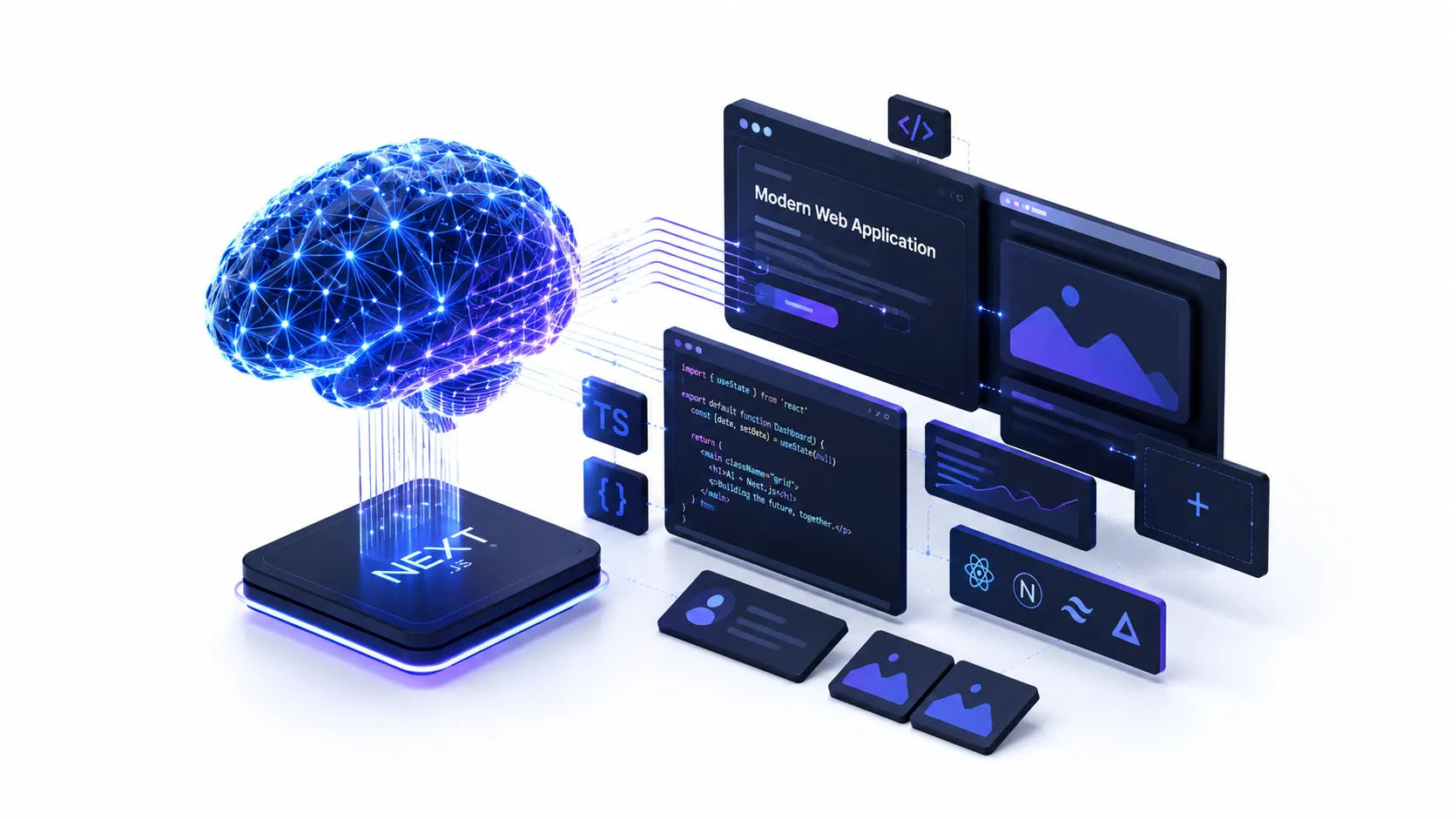
The web has come a long way from simple static pages. Today, users expect dynamic, personalized, and lightning-fast experiences. Meeting these demands requires innovative architectural patterns and powerful underlying technologies. This is where the synergy of Next.js Server Components (RSC) and Artificial Intelligence (AI) truly shines.
Understanding Next.js Server Components (RSC)
Next.js Server Components represent a paradigm shift in how we build UIs. By allowing developers to render components directly on the server, RSCs offer several significant advantages:
Improved Performance: Less JavaScript shipped to the client means faster initial page loads and better Core Web Vitals.
Direct Database Access: Server Components can directly interact with your backend services or databases, eliminating the need for client-side API calls for initial data fetching.
Enhanced Security: Sensitive data fetching logic remains on the server, never exposed to the client.
Simpler Data Fetching: Consolidate data fetching and rendering logic within the same component.
This server-first approach is key to building highly performant applications, especially when dealing with complex data or personalized content. For a deeper dive into optimizing your Next.js architecture, consider exploring strategies for Building a High-Performance Next.js 15 Micro-SaaS: The Blueprint for a Saleable CMS.
Integrating AI for Dynamic Personalization
While RSCs provide the performance backbone, AI injects the intelligence. By leveraging AI models, your Next.js application can adapt and personalize content, recommendations, and even UI elements in real-time. Imagine a user visiting your blog:
Personalized Content Feeds: An AI model analyzes past interactions and preferences to curate a unique stream of articles.
Dynamic Summaries: AI can generate concise summaries of longer articles on the fly, tailored to the user's apparent interest level.
Contextual UI Adjustments: Based on user behavior or external factors, AI could suggest different layouts or highlight specific calls to action.
Example: AI-Powered Article Recommendation with RSC
Consider a RecommendedArticles Server Component. Instead of fetching a static list, it queries an AI service to get personalized recommendations based on the logged-in user's profile and browsing history:
TypeScript
// app/components/RecommendedArticles.tsx (Server Component)
import prisma from '@/lib/prisma';
import { getPersonalizedRecommendations } from '@/lib/aiService';
import { getUserSession } from '@/lib/auth';

interface Article { id: string; title: string; slug: string; }

export default async function RecommendedArticles() {
  const user = await getUserSession();
  if (!user) {
    return null; // Don't show recommendations for guests
  }

  // Heavy AI fetching runs securely on the server side
  const recommendations: Article[] = await getPersonalizedRecommendations(user.id);

  return (
    <div className="bg-gray-900 p-6 rounded-lg shadow-lg mt-8 border border-gray-800">
      <h3 className="text-2xl font-bold text-white mb-4">Recommended for You</h3>
      <ul className="space-y-3">
        {recommendations.map((article) => (
          <li key={article.id}>
            <a href={`/blog/${article.slug}`} className="text-blue-400 hover:underline text-lg">
              {article.title}
            </a>
          </li>
        ))}
      </ul>
    </div>
  );
}
This approach keeps the heavy lifting on the server, delivering a highly relevant and fast experience to the user. For more practical applications of AI in content generation, see our guide on How to Build a Next.js 15 AI Content Generator with Gemini AI.
The Power of Synergy: RSC and AI in Action
Combining Next.js Server Components with AI opens up a world of possibilities for creating truly intelligent and responsive applications:
Real-time Dashboards: Imagine an admin portal where AI provides real-time insights and predictive analytics, rendered efficiently by Server Components without blocking page interactions. Such dynamic interfaces can greatly enhance operational control, as explored in AI-Powered Admin Dashboards with 1-Click Prompts.
Dynamic Data Delivery: AI personalization requires smart data streams. By combining Server Components with proper data fetching and caching configurations, you can prevent the layout from over-fetching or reloading completely.
Interactive Frameworks: You can easily pass structured AI responses into server functions to handle actions instantly. For more on this workflow, read about Unleashing Next.js Server Actions: A Full-Stack Revolution.
Conclusion
The future of web development lies in building intelligent, adaptable, and high-performance applications. Next.js Server Components provide the robust, efficient foundation, while AI infuses the intelligence needed for true personalization and dynamic user experiences. By mastering their combined power, developers can create next-generation web applications that are not only fast but also deeply engaging and uniquely tailored to every user.