Mastering Next.js Data Fetching: Unleash Performance with Server Components
Mastering Next.js Data Fetching: Unleash Performance with Server Components
In the rapidly evolving landscape of web development, performance and scalability aren't just buzzwords; they're fundamental requirements. For Next.js developers, optimizing how data is fetched and rendered is paramount to delivering exceptional user experiences. With the advent of the App Router and Server Components, Next.js has introduced powerful new paradigms that fundamentally change how we approach data management.
This isn't just about making things work; it's about making them blazingly fast and inherently scalable. Let's dig into the core strategies that will elevate your Next.js applications.
The Evolution of Data Fetching in Next.js
Historically, client-side rendering (CSR) dominated the React ecosystem, with data fetching typically handled in useEffect hooks or dedicated data libraries. Next.js revolutionized this with server-side rendering (SSR) and static site generation (SSG) in the Pages Router, offering significant SEO and performance benefits. However, the App Router, built on React Server Components, represents another leap forward.
This new architecture allows for a more granular control over where and when data is fetched, pushing more work to the server and reducing client-side JavaScript bundles. It’s a shift towards a truly full-stack framework experience, blurring the lines between frontend and backend.
Server Components: The Game Changer
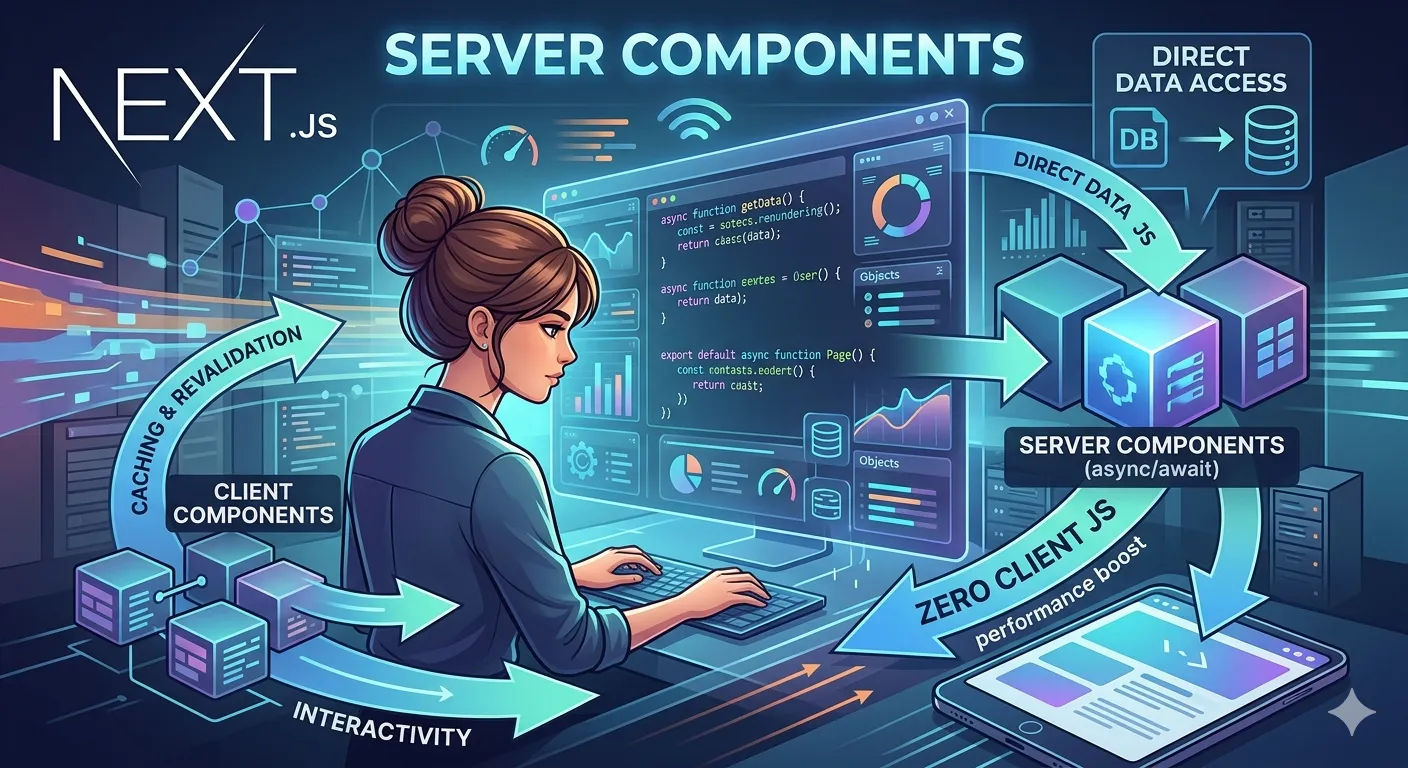
Server Components are perhaps the most significant innovation in Next.js 13+ for data fetching. They execute exclusively on the server, meaning they have zero JavaScript bundle size for the client and can directly access server-side resources like databases or file systems without needing API routes. This is a profound shift.
Why Server Components Matter for Performance
- Reduced Client Bundle Size: Since Server Components don't ship their code to the browser, your initial page load is significantly lighter.
- Improved Initial Load Performance: Data fetching and rendering happen on the server, sending fully-formed HTML to the client faster.
- Direct Data Access: Connect directly to your database or backend services without an intermediate API layer, simplifying your architecture.
- Enhanced Security: Server-side logic and sensitive data remain on the server, never exposed to the client.
When considering dynamic experiences and integrating advanced capabilities, understanding Server Components is crucial. They are the backbone for building highly interactive and performant applications, especially when combined with other powerful features. For a deeper dive into how these components enhance dynamic content, consider reading our post on Beyond Static: Next.js Server Components and AI for Dynamic Experiences.
Data Fetching Patterns with Server Components
The beauty of Server Components is their simplicity for data fetching. You can use standard JavaScript async/await directly within your components: