Strategic AI Implementation: Unlocking Real Business Value Beyond the Hype
Strategic AI Implementation: Unlocking Real Business Value Beyond the Hype
The buzz around Artificial Intelligence (AI) is undeniable. From automating mundane tasks to predicting market trends, AI promises a future of unprecedented efficiency and innovation. Yet, for many businesses, the journey from AI aspiration to tangible, measurable value remains a challenge. It’s easy to get swept up in the hype, but true success lies in strategic implementation that aligns with core business objectives.
Ignoring the transformative power of AI is no longer an option. As we've explored previously in The AI-Powered Business Transformation: Why Small Businesses Can't Afford to Wait, the imperative for adoption is clear. However, merely dabbling in AI tools without a coherent strategy often leads to fragmented efforts and disappointing returns. The key is to move beyond experimentation and embed AI strategically into your operational fabric.
Identifying High-Impact Areas for AI
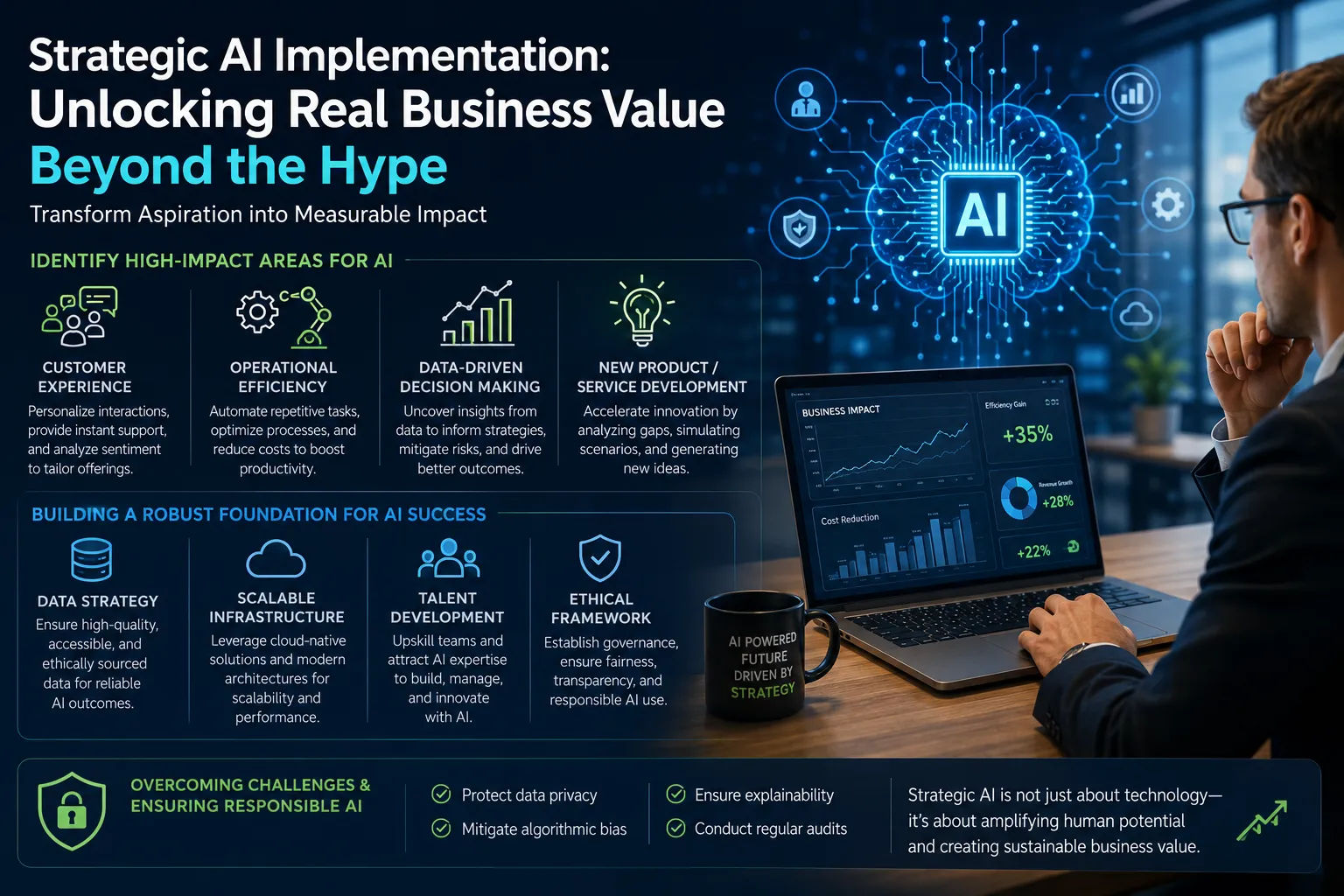
Before investing heavily, businesses must identify specific areas where AI can deliver the most significant impact. This isn't about finding problems for AI to solve, but rather about pinpointing existing pain points or growth opportunities where intelligent automation and data analysis can provide a competitive edge. Consider:
- Customer Experience: AI can personalize interactions, provide instant support through chatbots, and analyze sentiment to tailor offerings. Think hyper-personalization in marketing, as discussed in AI for Hyper-Personalization: Revolutionizing Small Business Marketing.
- Operational Efficiency: Automating repetitive tasks, optimizing supply chains, and predictive maintenance can significantly reduce costs and improve throughput.
- Data-Driven Decision Making: AI can uncover hidden patterns and insights from vast datasets, informing product development, sales strategies, and risk management.
- New Product/Service Development: AI can accelerate R&D by simulating scenarios, analyzing market gaps, and even generating new creative content.
Building a Robust Foundation for AI Success
Strategic AI implementation requires more than just choosing the right algorithms; it demands a solid foundation:
- Data Strategy: AI is only as good as the data it's fed. Businesses need a clear strategy for data collection, cleaning, storage, and accessibility. This includes ensuring data quality, consistency, and ethical sourcing.
- Scalable Infrastructure: Implementing AI often requires significant computational power. Cloud-native solutions and modern web architectures, like those built with Next.js, can provide the necessary scalability and performance.
- Talent Development: Investing in upskilling existing teams or hiring AI specialists is crucial for both development and ongoing management of AI systems.
- Ethical Framework: As AI becomes more integrated, establishing clear ethical guidelines and governance is paramount to build trust and ensure responsible use. This directly ties into the principles of AI Governance: Navigating Ethical AI for Sustainable Business Growth.
Overcoming Challenges and Ensuring Responsible AI
The path to strategic AI adoption isn't without its hurdles. Data privacy concerns, algorithmic bias, and the need for explainability are all critical considerations. Businesses must implement robust security measures, conduct regular audits of AI models, and foster a culture of transparency.
Ultimately, strategic AI implementation is about envisioning a future where technology amplifies human capabilities, drives innovation, and creates sustainable value. It's about moving beyond the superficial and embracing AI as a core strategic asset, carefully integrated into every facet of your business operations.