The Edge of Intelligence: Next.js, AI, and the Future of Web Development
The Edge of Intelligence: Next.js, AI, and the Future of Web Development
Artificial intelligence is no longer a futuristic concept; it's a fundamental layer in today's most compelling digital experiences. From hyper-personalized content to intelligent search, AI is reshaping how users interact with the web. For developers, the challenge isn't just integrating AI, but doing so efficiently, scalably, and with exceptional performance. This is where Next.js, with its unique architecture, steps in as a powerful ally.
As an editor, I've seen countless discussions around optimizing web performance and integrating advanced features. The convergence of Next.js and AI represents one of the most exciting frontiers in web development, promising applications that are not just fast, but truly smart.
The Synergy: Next.js's Architecture Meets AI
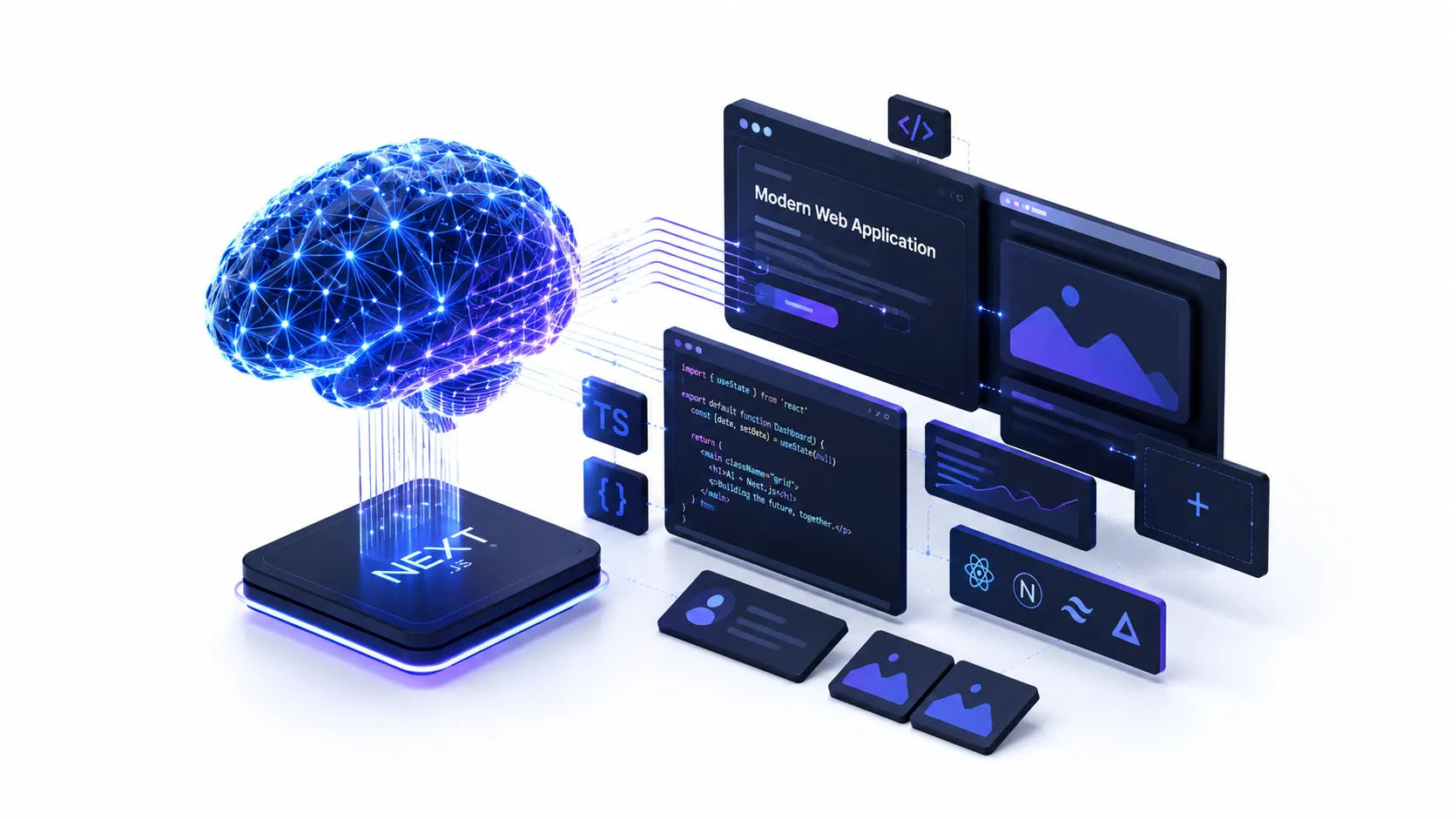
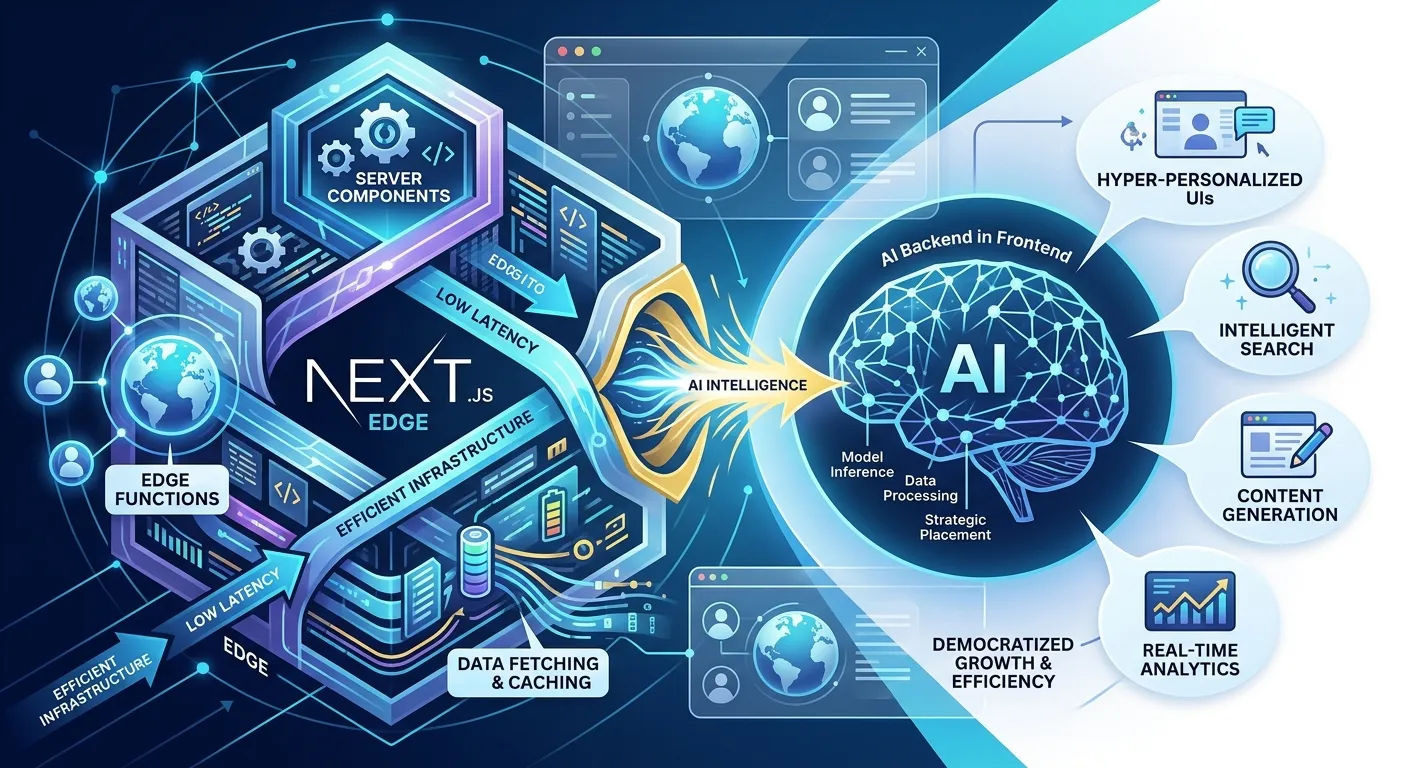
Next.js, particularly its recent iterations, offers a robust framework designed for modern web applications. Its core features—Server Components, Edge Functions, and intelligent data fetching—are perfectly positioned to host and enhance AI capabilities.
Server Components: The AI Backend in Your Frontend
Next.js Server Components allow developers to render parts of their application directly on the server, bringing traditional backend logic closer to the frontend. For AI, this is a game-changer. Imagine running complex AI model inferences or data processing tasks directly on the server during the rendering process, without burdening the client. This approach not only improves perceived performance but also enhances security by keeping sensitive AI logic server-side. It's a significant leap beyond purely static sites, enabling truly dynamic and personalized experiences powered by AI, as we've explored previously in Beyond Static: Next.js Server Components and AI for Dynamic Experiences.
Edge Functions: Bringing Intelligence Closer to the User
The 'edge' refers to computing resources located geographically closer to the end-user. Next.js, especially when deployed on platforms like Vercel, leverages Edge Functions to execute code with minimal latency. For AI, this means:
- Faster Inference: Running lightweight AI models (e.g., for content moderation, personalization cues, or real-time recommendations) at the edge significantly reduces the round-trip time, leading to snappier user experiences.
- Personalized Content Delivery: Dynamically adjusting content based on user attributes or behavior, determined by AI models running at the edge, before the full page even renders.
- A/B Testing & Feature Flags: AI-driven optimization of user flows and feature rollouts can be executed with precision at the edge.
Data Fetching and Caching: Fueling AI Models Efficiently
AI models thrive on data. Next.js provides sophisticated data fetching mechanisms (getServerSideProps, getStaticProps, Server Actions, and direct database access within Server Components) that can efficiently retrieve the necessary information to feed AI processes. Combine this with intelligent caching strategies, and you have a system capable of providing fresh, relevant data to your AI models without compromising application speed. This efficiency is key for democratizing growth and efficiency for businesses looking to integrate AI without massive infrastructure overhead.
Practical Applications and Real-World Impact
The combination of Next.js and AI opens doors to a new generation of web applications:
- Hyper-Personalized User Interfaces: Dynamically generated content, layouts, and recommendations tailored to individual user preferences, powered by AI and rendered efficiently with Server Components.
- Intelligent Search and Filtering: AI-powered semantic search that understands user intent, delivering more accurate results than traditional keyword matching.
- Content Generation and Summarization: Integrating AI models to generate descriptions, summaries, or even entire articles on the fly.
- AI-Powered Admin Dashboards: Streamlining complex operations with AI-driven insights and one-click prompts, as seen in AI-Powered Admin Dashboards with 1-Click Prompts.
- Real-time Analytics and Insights: Processing user behavior data at the edge to provide immediate, actionable insights to businesses.
Best Practices for Integrating AI with Next.js
To maximize the potential, consider these best practices:
- Strategic Placement: Determine whether AI inference is best suited for Server Components (complex, data-intensive), Edge Functions (low-latency, lightweight), or dedicated API routes (for external AI services).
- Data Security: Ensure sensitive data used by AI models remains secure, leveraging server-side execution and robust API authentication.
- Performance Monitoring: Continuously monitor the performance impact of AI integrations, especially on response times and resource utilization.
- Progressive Enhancement: Design AI features to degrade gracefully, ensuring a functional experience even if AI services are temporarily unavailable or disabled.
The Future is Intelligent and Fast
Next.js is not just a framework for building performant websites; it's an ecosystem designed for the future of the web—a future where intelligence is deeply embedded into every user interaction. By strategically leveraging Server Components, Edge Functions, and its robust data layer, developers can build applications that are not only incredibly fast and scalable but also profoundly intelligent. The edge of intelligence is here, and Next.js is leading the charge.