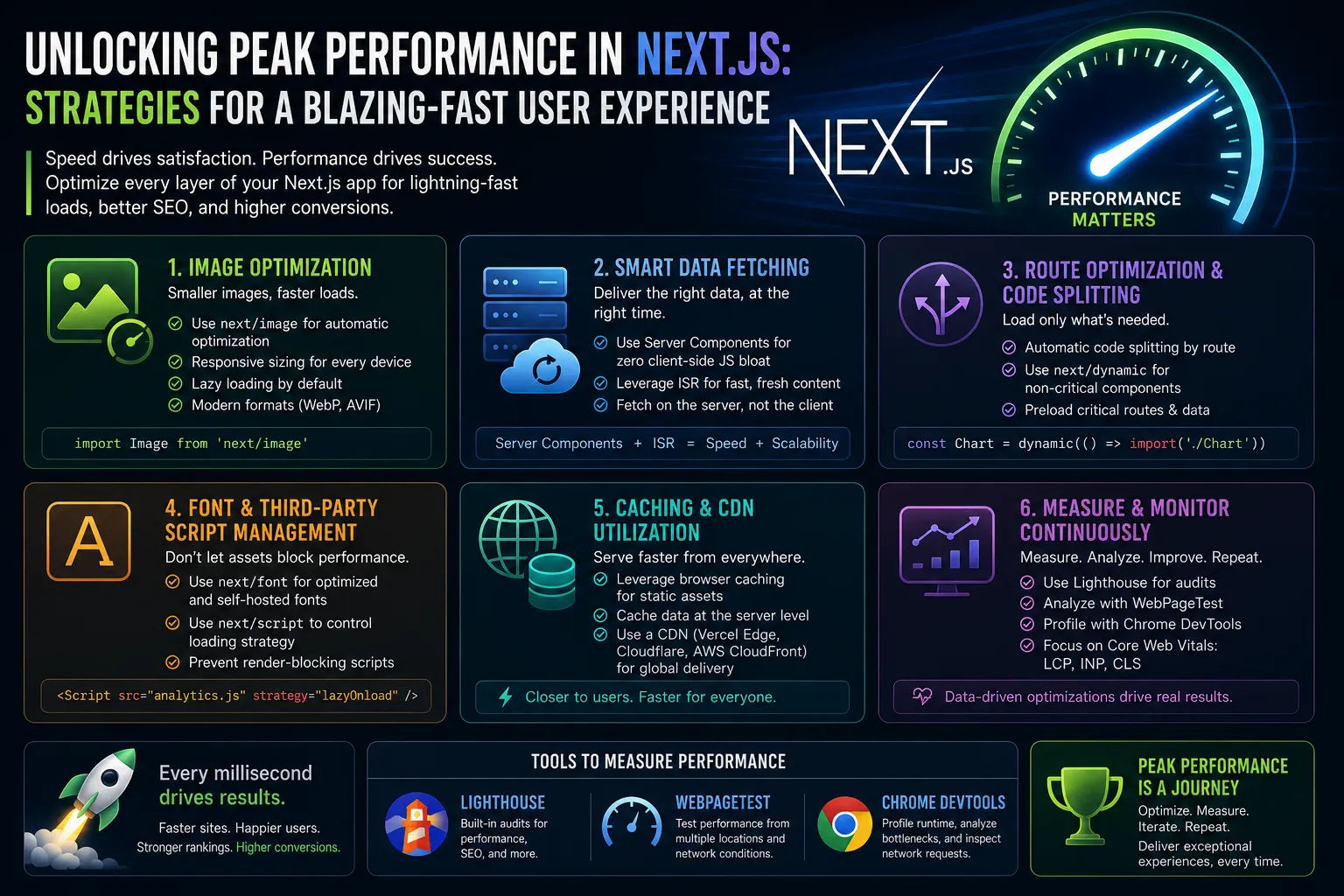
Unlocking Peak Performance in Next.js: Strategies for a Blazing-Fast User Experience
Unlocking Peak Performance in Next.js: Strategies for a Blazing-Fast User Experience
In today's digital landscape, speed isn't just a feature; it's a fundamental expectation. Users demand instant gratification, and search engines reward websites that deliver it. For developers working with Next.js, this means going beyond the framework's inherent optimizations to actively fine-tune every aspect of an application's performance. A blazing-fast site doesn't just improve user satisfaction; it directly impacts SEO, conversion rates, and overall business success.
Why Every Millisecond Counts: The Performance Imperative
Think about your own browsing habits. How long do you wait for a page to load before hitting the back button? The answer, for most, is not long at all. Studies consistently show that even a one-second delay in page response can lead to a significant drop in page views, customer satisfaction, and conversions. Google's Core Web Vitals initiative further cements performance as a critical ranking factor, making it impossible to ignore.
Next.js provides a robust foundation with features like server-side rendering (SSR), static site generation (SSG), and automatic code splitting. However, these are starting points, not finish lines. True performance mastery comes from understanding and implementing advanced optimization techniques.
Core Strategies for Next.js Performance Mastery
Image Optimization: The Low-Hanging Fruit
Images are often the heaviest assets on a webpage. Unoptimized images can single-handedly tank your performance, regardless of how efficient the rest of your code is. Next.js offers the powerful next/image component, which automatically handles:
- Responsive Sizing: Delivers different image sizes based on the user's device.
- Lazy Loading: Images outside the viewport are loaded only when they're about to become visible.
- Modern Formats: Serves images in formats like WebP or AVIF when supported by the browser, significantly reducing file size without compromising quality.
Leveraging next/image is non-negotiable for modern Next.js applications. To learn more about implementing optimized images, check out our guide on how to Build An Optimized Hero Image And Featured Posts Section In Nextjs With Prisma And Tailwind Css.
Smart Data Fetching with Server Components and ISR
How and when you fetch data profoundly impacts your application's speed. Next.js 13+ introduced Server Components, a paradigm shift that allows rendering components entirely on the server, sending only the necessary HTML and CSS to the client. This dramatically reduces client-side JavaScript bundles, improving initial load times and interactivity.
For content that doesn't change with every request but needs to be fresh, Incremental Static Regeneration (ISR) is your ally. ISR allows you to generate and update static pages in the background after the initial build, offering the performance benefits of static sites with the flexibility of dynamic data. It's perfect for blogs, product pages, or news feeds where content is updated periodically.