Building a Global SaaS: Why I Moved from Django to Next.js 15 in 2026
Listen to Article
High-quality browser TTS. No downloads.
Speed
Building a Global SaaS: Why I Moved from Django to Next.js 15 in 2026
For any startup founder, the choice of a tech stack is perhaps the most critical decision after the business idea itself. In the early days of building Wisemix Media, I followed the traditional path: I chose Django. It’s a powerhouse, "batteries-included" framework with a built-in authentication system that feels like a dream for rapid development. But as I moved from local development to a global production environment, I hit a wall that every performance-conscious developer fears.
In this article, I’ll share my journey of why I abandoned a stable Django setup for the modern, high-speed world of Next.js 15 and Vercel.
The Django Dream and the VPS Reality
Django is famous for its robustness. Having a built-in admin panel and an authentication system ready out of the box makes you feel like you're flying. However, the trouble started when I tried to host it. I opted for a Hostinger Basic Plan KVM1 VPS. I thought a dedicated Virtual Private Server would give me the control I needed.
Instead, it gave me a second job as a System Administrator.
I spent countless hours staring at a terminal, managing Ubuntu Linux via SSH. I had to manually install SSL certificates, configure Nginx, and manage Gunicorn workers. Every time I wanted to update the site, it was a manual process that felt fragile.
The Performance Nightmare: FCP, LCP, and TTFB
Despite all the manual tuning, the performance metrics were heartbreaking. When I ran speed tests, the results were red across the board:
TTFB (Time to First Byte): Because the VPS had to process every request through the Django middleware before sending a response, the lag was noticeable.
FCP (First Contentful Paint) & LCP (Largest Contentful Paint): My users were waiting far too long to see the first pixel of my content.
CLS (Cumulative Layout Shift): Managing CSS and assets manually often led to layout shifts that ruined the user experience.
As a developer working a 10-hour labor job, I didn't have the luxury of spending my few free hours fighting with a Linux server. I needed a stack that worked for me, not the other way around. This realization led me to start my journey building a full-stack web app from a Saudi labor camp, where I decided to pivot entirely.
Enter Next.js 15: The Full-Stack Revolution
Switching to Next.js 15 felt like moving from a manual transmission truck to a self-driving electric car. By adopting a zero-cost Next.js 15 stack, I moved away from manual server management and into the era of specialized cloud infrastructure.
1. Deployment Simplicity with Vercel
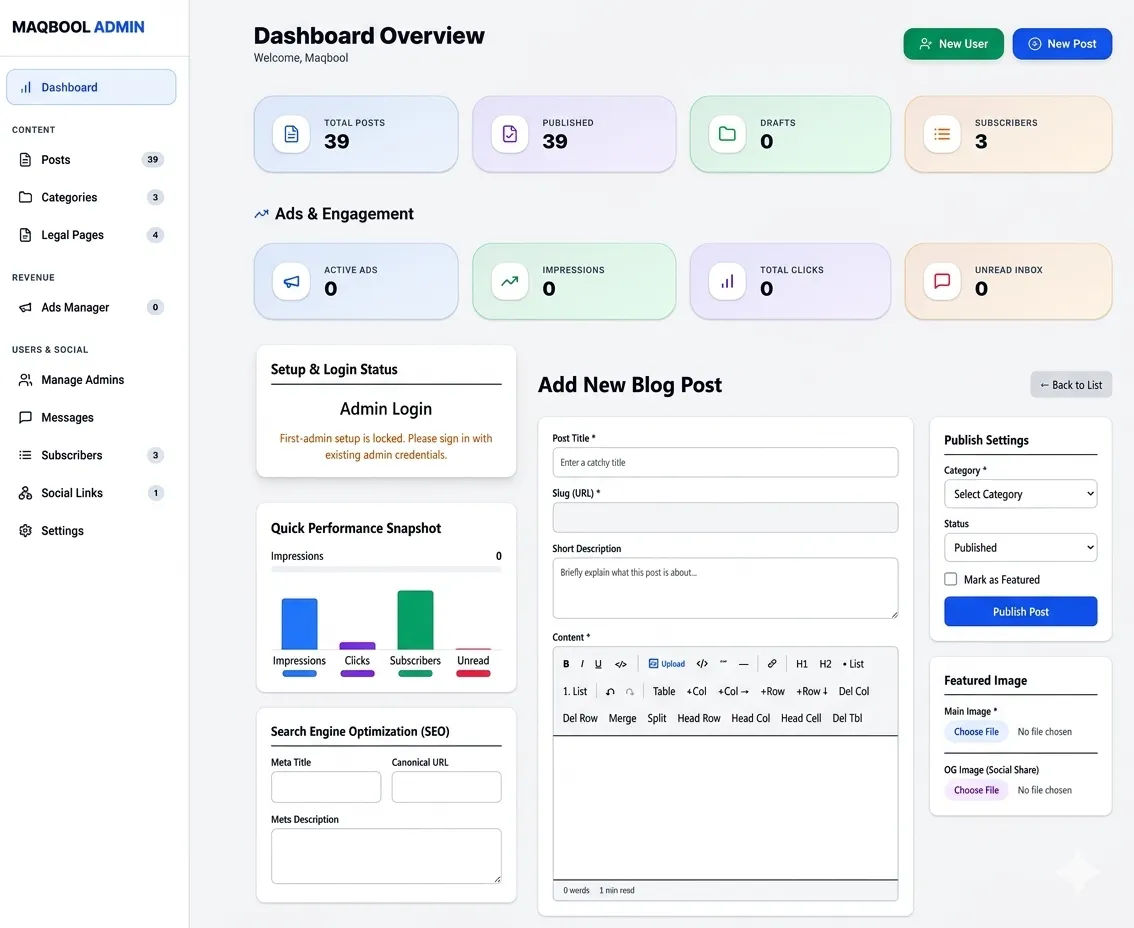
The biggest "aha!" moment was the integration with Vercel. Now, when I want to update Wisemix Media, I don't touch SSH or Nginx. I simply do a git push. Vercel detects the change, builds the project, and deploys it globally in seconds. If something goes wrong, I can revert with one click. This ease of deployment is exactly what startup founders need in 2026 to stay agile.
2. Speed That Wins SEO
The performance difference was night and day. Because Next.js 15 uses Server Components and Static Site Generation (SSG), my pages are pre-rendered and served from an Edge Network close to the user.
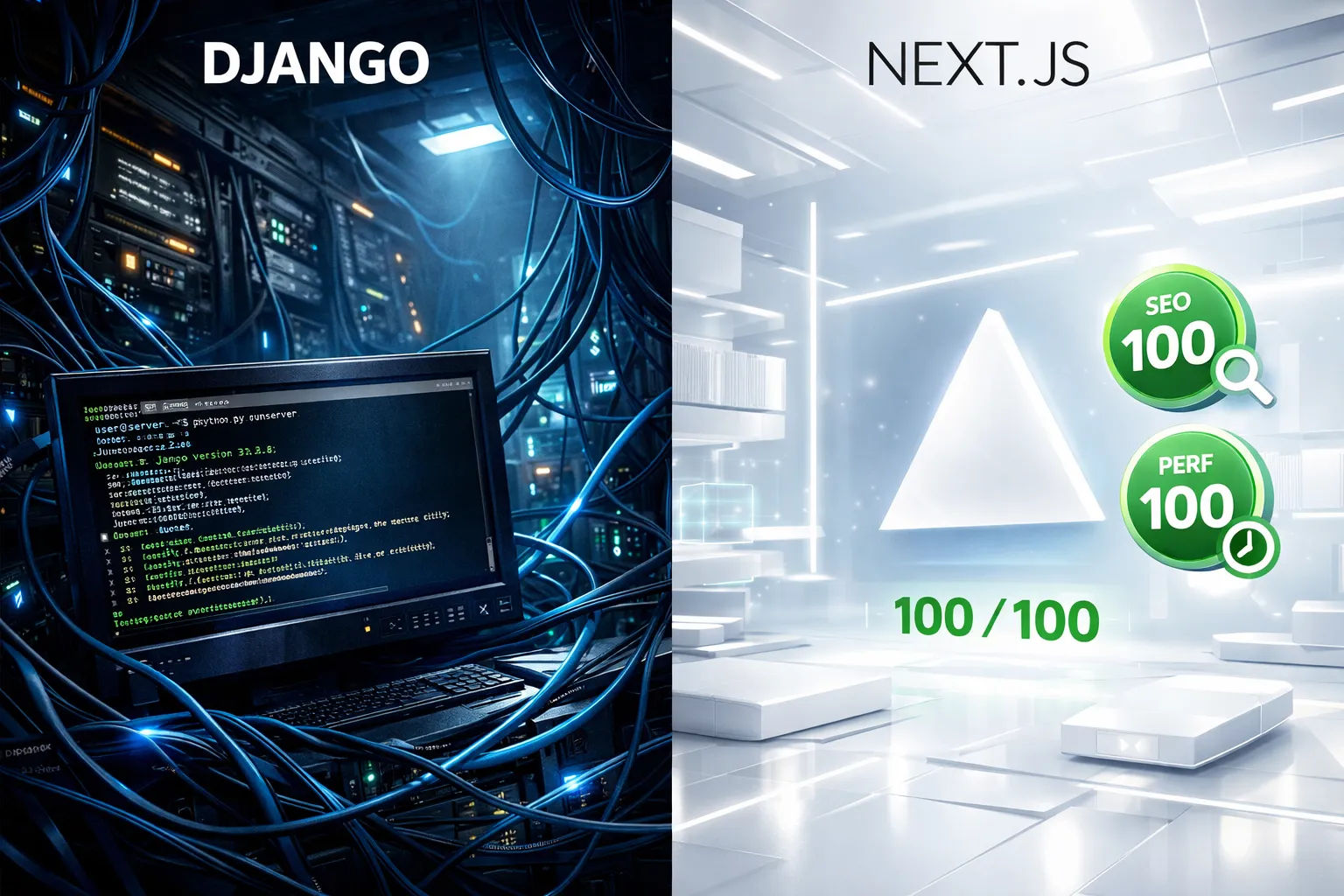
Performance: 100/100
SEO: 100/100
CLS: 0 (Perfect stability)
FCP: Under 1 second
This speed isn't just a vanity metric; it’s essential for ranking. I've detailed exactly how to achieve 100/100 page speed on Next.js 15 using ImageKit and ISR, something that was nearly impossible on my old Django VPS setup without expensive upgrades.
Why Next.js 15 is Easier to Learn and Scale
Many developers argue that Django is easier because of the built-in features. However, in 2026, the Next.js ecosystem has caught up. Using Prisma with PostgreSQL (via Supabase) gives you a database experience that is just as powerful as Django's ORM but with much better type safety.
Moreover, the "Human Touch" of the Next.js community and the documentation makes it incredibly approachable. Whether you are building a simple blog or building a multi-tenant ads management system, the framework handles the heavy lifting of routing, optimization, and scaling.
Final Thoughts: Don't Fight the Infrastructure
If you are a startup founder, your time is your most valuable asset. Spending it on apt-get update and fixing 502 Bad Gateway errors on a VPS is a waste of your talent.
I love Next.js because it allows me to focus on features, not infrastructure. It gave me my time back. While Django will always have a place in the backend world, for a modern, global, and high-speed SaaS, Next.js 15 is the undisputed champion.
If you're ready to make the switch, start by looking at Next.js 15 interview questions to see how the logic differs from traditional frameworks. You won't regret the move to a faster, cleaner, and more productive future.
Technical Comparison: Django vs. Next.js 15
This table highlights the shift from "Server-Heavy" to "Edge-Ready" architecture.
Feature | Django (Traditional VPS) | Next.js 15 (Vercel/Edge) |
Deployment | Manual (SSH, Nginx, Gunicorn, SSL) | Automated (Git Push, CI/CD) |
Hosting Strategy | VPS (KVM1/Ubuntu) | Serverless / Edge Runtime |
Performance (TTFB) | Slow (Middleware overhead) | Instant (Edge Caching) |
SEO & Core Web Vitals | Hard to Optimize (CLS/LCP issues) | Native Optimization (100/100) |
Asset Management | Manual (Whitenoise/Nginx) | Automated (ImageKit/Next Image) |
Scaling | Vertical (More RAM/CPU) | Horizontal (Global Edge Network) |
Maintenance | High (Security patches, Linux updates) | Zero (Platform handles infrastructure) |