Next.js and Edge AI: Unleashing Real-time Intelligence at the Edge
The Ultimate Guide to Next.js and Edge AI: Bringing Intelligence Closer to the User
Meta Description: Discover how Next.js empowers Edge AI to deliver ultra-low latency and robust privacy. Learn how to leverage Edge Functions, Server Components, and JavaScript runtimes for high-performance applications.
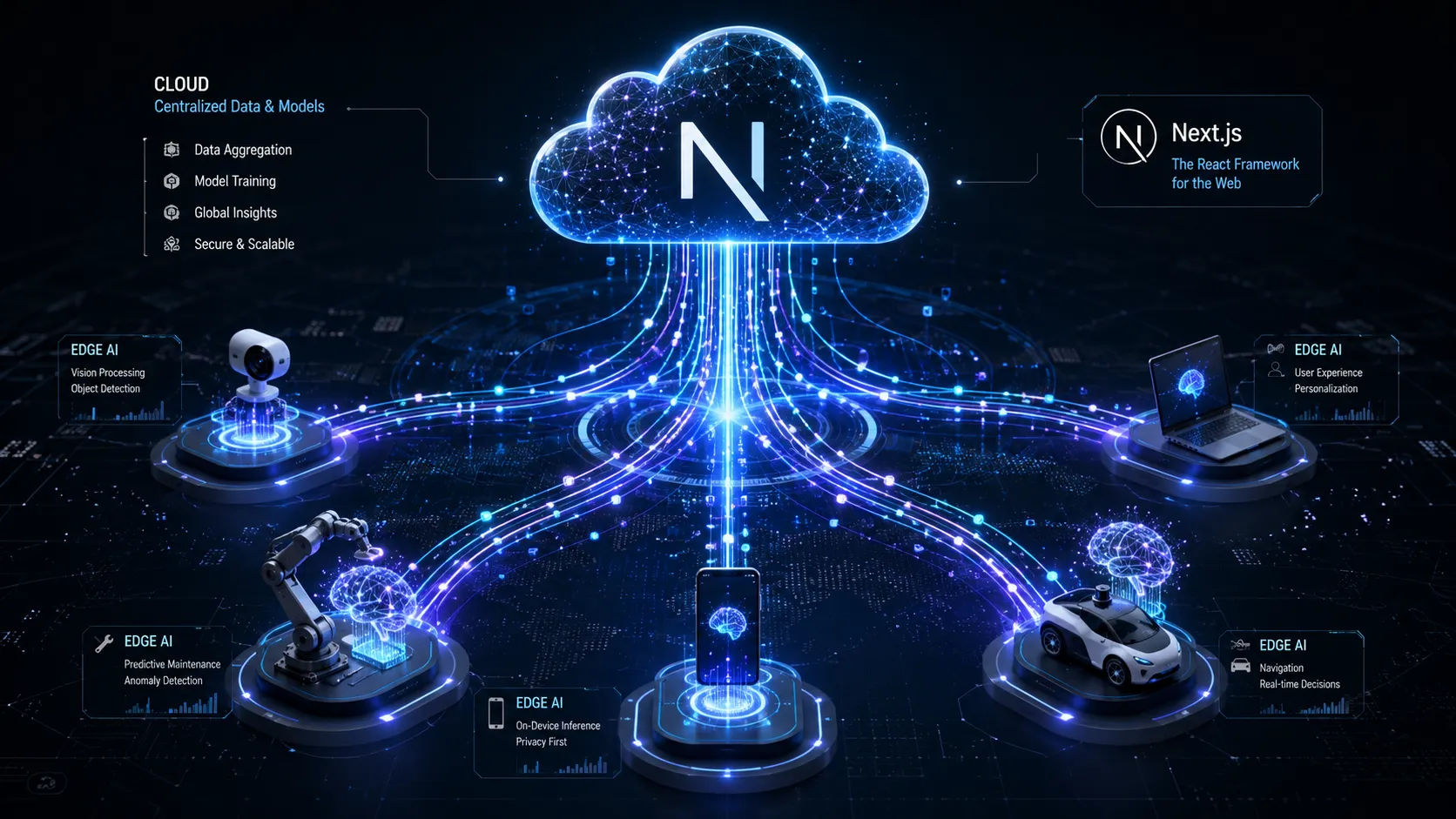
Artificial Intelligence continues to reshape how we interact with technology, moving from simple personalized recommendations to complex, real-time data analysis. Traditionally, AI processing has largely occurred in centralized cloud data centers. However, a powerful new paradigm is taking over: Edge AI.
This approach brings AI computation directly to the 'edge' of the network—closer to the data source and the end-user. Whether it is smart devices, local servers, or running lightweight models directly in the user's browser, Edge AI significantly reduces latency and enhances data privacy.
The implications are profound, especially for modern applications demanding real-time responsiveness and strict security. But how does a modern web framework like Next.js fit into this evolving ecosystem?
Why Next.js is a Game-Changer for Edge AI Applications
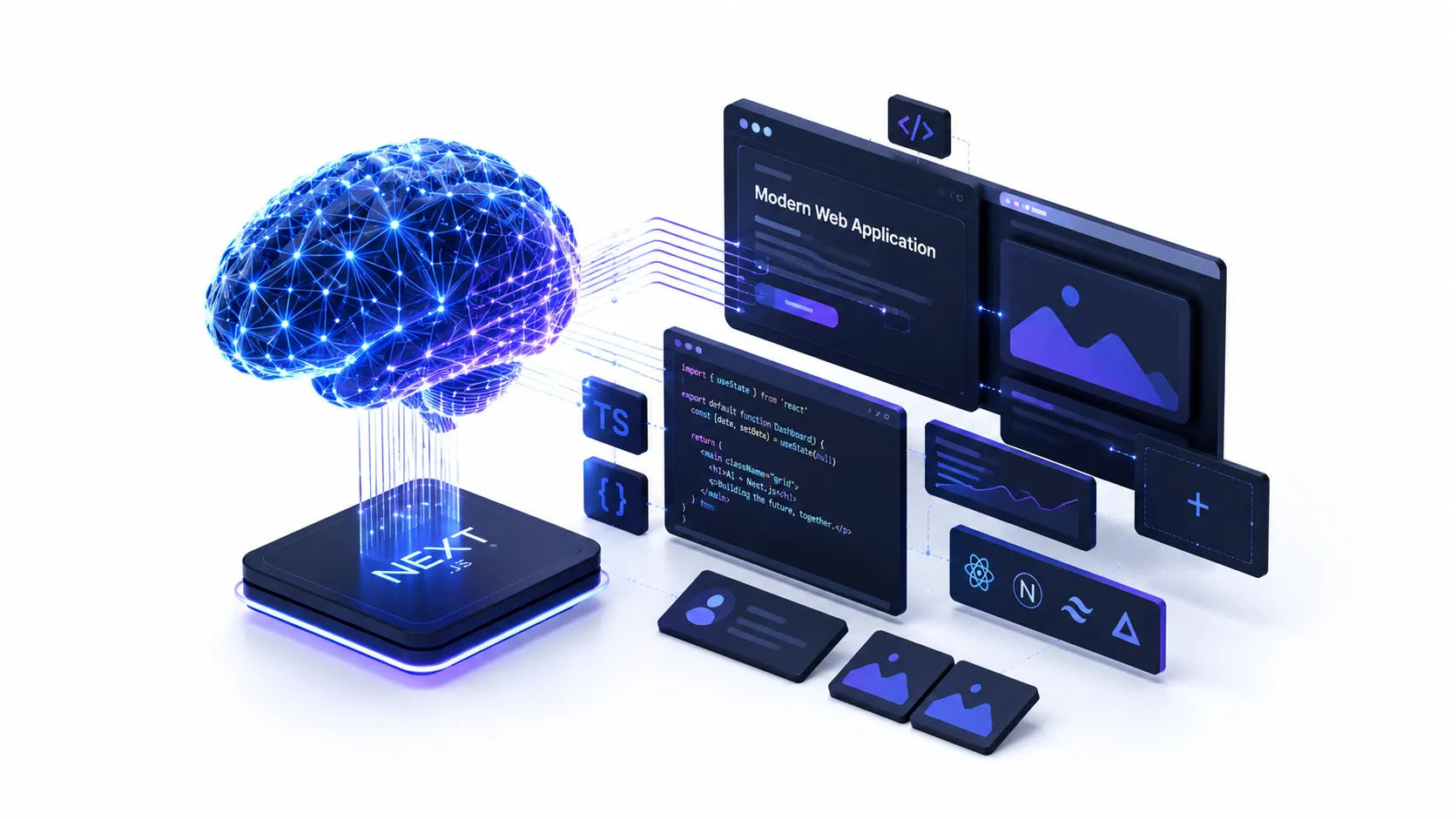
Next.js, with its hybrid rendering capabilities, Server Components, and optimized API architecture, offers a compelling environment for building production-ready Edge AI applications. Choosing this stack allows you to build a high-performance Next.js website capable of placing AI logic exactly where it makes the most sense: on the cloud server, at the edge node, or client-side.
1. Ultra-Low Latency with Edge Functions
Next.js applications can seamlessly leverage Edge Functions (powered by lightweight runtimes like Vercel's Edge Runtime or Cloudflare Workers) to execute code geographically closer to the user.
This is crucial for AI tasks where every millisecond counts. Imagine a real-time content moderation system or an e-commerce recommendation engine that needs to react instantly to user behavior. By running AI inference at the edge, data travels much shorter distances. This dramatically reduces latency compared to traditional round-trips to distant cloud servers, aligning perfectly with supercharging Next.js APIs using global edge networks.
2. Hybrid AI Workloads with React Server Components (RSC)
Next.js Server Components enable developers to fetch data and perform computations directly on the server, sending only the final, lightweight UI to the client.
This paradigm is incredibly powerful for Edge AI. You can pre-process raw data, clean user prompts, or run lightweight AI models on the server/edge before rendering the page. Harnessing Server Components for dynamic AI experiences offloads heavy computational burdens from the user's device, ensuring a lightning-fast initial page load and a smooth user experience.
3. Streamlined AI Integration via Route Handlers
With the Next.js App Router, Route Handlers provide a straightforward way to build backend API endpoints. These routes can serve as secure conduits for complex AI models hosted in the cloud (like OpenAI, Claude, or custom LLMs) or act as wrappers for smaller, specialized AI models deployed directly to edge nodes. For full-stack integration, you can also combine these routes with Next.js Server Actions to handle direct form states and real-time interface updates seamlessly.
Practical Applications of Next.js Edge AI
The synergy between Next.js and Edge AI opens doors to innovative web experiences and practical applications: